
Juki LU-1509N Review: Handling Beasts with Ease
The Juki LU-1509N is not a home machine; it is a heavy-duty, industrial walking foot powerhouse engineered for relentless work on materials like upholstery, leather, and canvas. Its complexity lies in its precise, synchronized mechanical systems—the rectangular feeding motion and the alternating vertical movement—which are designed to prevent stitch gathering and slippage on the most difficult layers.
This review cuts through the specifications to provide an expert analysis of its performance, crucial setup details, and whether its complexity is worth the investment for specialized projects.
Juki LU-1509N Review: Features
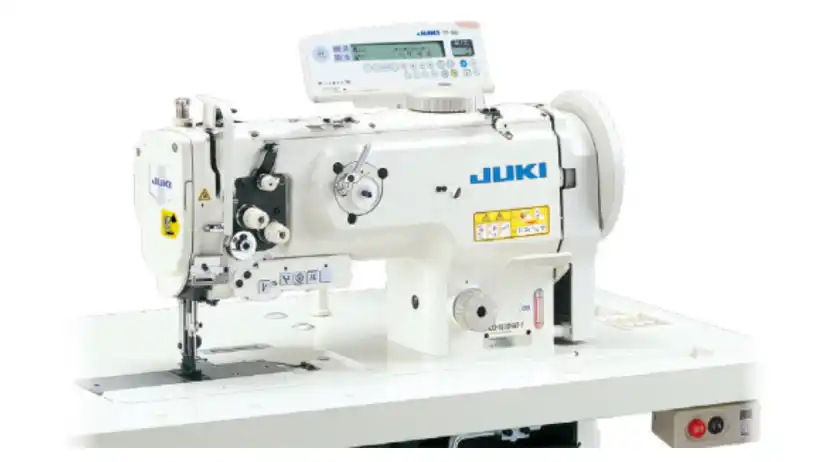
Synchronized Walking Foot System
The 1509N’s reputation stems from its superior feeding mechanism, which overcomes the problems common in domestic machines when dealing with thickness.
Rectangular Feeding Motion: Why it Prevents Stitch Gathering
Unlike the elliptical motion of home machines, JUKI’s rectangular feeding motion keeps the feed dogs in contact with the fabric for a longer duration, ensuring the material is moved steadily and consistently.
This prevents the two layers of fabric (top and bottom) from feeding at different rates—a phenomenon known as “ply slippage”—which is the primary cause of puckering when sewing long pieces of vinyl or webbing.
Alternating Vertical Movement (Adaptive Pressure)
This mechanism ensures the presser foot and walking foot maintain perfect pressure regardless of fabric thickness, allowing the machine to literally walk over uneven layers like crossed seams.
The alternating vertical movement has an adjustment range of up to 6.5mm. In my experience, the machine is shipped with a neutral setting; for consistent work on heavy leather, this range needs to be fine-tuned to maximize the foot lift and prevent marking the leather.
For a guide on a simpler walking foot challenge, see our tutorial on how to adjust feed dogs on a sewing machine for free motion quilting.
2. Power Systems: Tension, Thread, and Hook Capacity
The LU-1509N must handle thicker thread and continuous operation. Its specialized systems are built for this endurance.
Dual Tension Mechanism and Thick Thread Management
The integrated dual tension mechanism (with two tension disc sets) provides a broader and more stable tension range for thick thread sizes (up to #5).
When using heavy bonded nylon thread, I found the tension setting needed to be higher than standard (around 6-7). This dual system provides the necessary muscle to maintain a tight lock stitch without causing the thread to break. This is a level of thread control domestic machines cannot match.
Vertical-Axis Hook and Bobbin Endurance
The vertical-axis double-capacity hook is industrial grade.
The oversized bobbin capacity allows for hours of sewing on long runs (like boat covers or large upholstery panels) without the frustrating interruption of changing the bobbin—a necessity when working with industrial materials. The vertical axis design also makes the machine more stable at high speeds.
If you’re dealing with thread problems on a home machine due to tension, consult our guide on how to fix loose stitches to see the difference between a home and industrial system.
The User Experience and Construction
Industrial machines require specialized care. This section addresses the reality of owning a Juki LU-1509N.
Construction and Maintenance
The LU-1509N features all-metal internal mechanisms, a cast iron body, and oil bath lubrication.
- Longevity: The oil bath is the machine’s greatest maintenance feature. It ensures continuous lubrication, which is essential for preserving the machine’s high-performance motor and reducing the risk of overheating—a common cause of slowness or failure in home machines.
- The Power Factor: The standard machine comes as a head only and requires an industrial AC servo motor and table, which must be purchased and assembled separately. This significantly impacts the final cost and space requirements.
Ergonomics: Handwheel, Knee Lifter, and Lift
The machine’s extra high 16mm presser foot lift and integrated knee lifter are crucial ergonomic features.
The knee lifter is indispensable when managing large, heavy, bulky projects (e.g., car seats). It allows you to lift the foot while keeping both hands free to guide the material. The oversized 160mm handwheel provides essential torque for slow, precision stitching through the thickest starting points.
The Final Verdict on the Juki LU-1509N
The Juki LU-1509N is the premier choice for professional or dedicated hobbyists who consistently work with challenging, heavyweight materials. Its superior rectangular feed and alternating vertical movement make it a specialized tool—it handles materials that would stall any home heavy-duty machine. While the required setup (table, motor) makes it a significant investment, its durability and flawless stitch quality on leather and canvas make it an unmatched, authoritative workhorse that fully justifies the cost for serious use.
If you need a reliable but more manageable home machine, compare its features to the best consumer heavy-duty model in our detailed review of the Singer 4423.