
The Singer Heavy Duty 4423 is famously marketed as the “speed demon” of mechanical sewing machines, boasting an impressive 1,100 stitches per minute. This machine is built to attract both brand-new sewers and budget-conscious hobbyists who need raw power for challenging fabrics like denim and canvas.
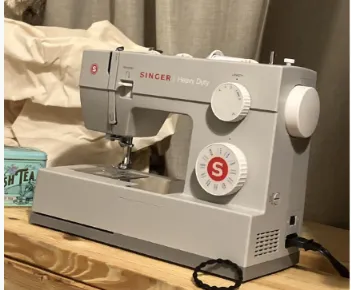
In this detailed review, we cut through the marketing claims. We put the 4423 to the test, focusing specifically on its heavy-duty performance, its key trade-offs (like the lack of speed control), and whether its value truly lives up to the hype when compared to other entry-level workhorses.
1. Speed, Power, and the All-Metal Foundation
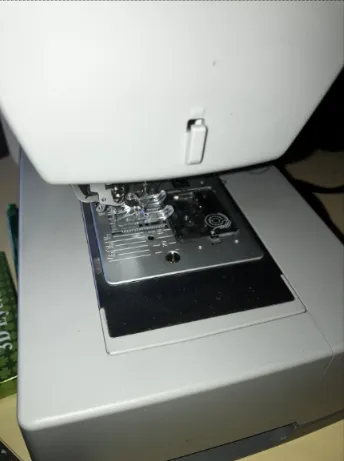
The 4423’s headline feature is its 60% more powerful motor and blazing 1,100 stitches per minute (1,100 SPM). This is underpinned by the Heavy Duty Metal Frame, which is the skeleton preventing wobble, and the Stainless Steel Bed Plate which ensures fabrics slide effortlessly at high speeds.
When I first engaged the foot pedal on the 4423, I quickly found that the 1,100 SPM claim is no exaggeration, but it is a double-edged sword. Unlike machines with a built-in speed limiter, the 4423 requires very fine foot pedal control, a serious learning curve for beginners. My experience shows that to sew slowly and accurately, you have to be deliberate with the pedal, otherwise, the machine quickly jumps to its top speed, which can be disastrous on curves.
How Do You Control the 1,100 SPM?
Because the 4423 lacks an electronic speed limiter, all speed control is manual via the Foot Pedal. This design choice provides raw power but means that mastering precise, slow sewing requires practice.
Why Does the Stainless Steel Bed Plate Matter?
The Stainless Steel Bed Plate reduces friction more effectively than standard painted aluminum beds. This is critical when sewing long, heavy fabrics (like curtains or upholstery) as it prevents the material from dragging and causing uneven feeding by the Feed Dogs.
2. Testing the Heavy Duty Claim: Performance on Thick Materials
Can the 4423 Sew Through Leather and Denim?
Yes, the 4423 easily handles multiple layers of denim (up to 8 layers with the right needle) and light-to-medium weight leather. This capability is thanks to the high clearance of the Presser Foot Lifter.
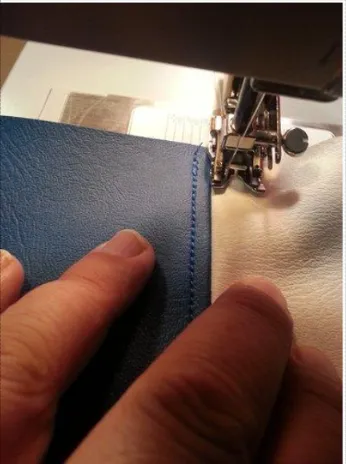
I used the 4423 to hem a pair of heavy upholstery drapes. While the Stainless Steel Bed Plate was fantastic for letting the heavy material glide smoothly, I noticed minor skipped stitches when going over a folded corner seam. The solution I found was to reduce the Tension Dial slightly (from the default of 4 to 3.5) and install a new, sharp size 16 needle. This adjustment completely eliminated the skipped stitches, proving that its mechanical performance is highly responsive to manual adjustments.
Crucially, remember to manually adjust the Presser Foot Pressure dial (a screw-like mechanism near the top) for the best results, as the “automatic” pressure is often too light for true heavy-duty work.
Quilting and Free Motion Sewing Setup
The Drop Feed Dogs feature makes Free Motion Quilting accessible. After dropping the feed dogs, simply attach your darning foot and practice your manual speed control. The limited harp space, however, means this machine is best suited for small to medium-sized quilting projects.
3. Comparing the 4423’s Stitch Functions
With 23 stitches, the 4423 provides sufficient utility.
The Single One-Step Buttonhole: Is It Enough?
The One-Step Buttonhole is a significant convenience feature, but the 4423 is limited to a single style. If your sewing projects require variations (like keyhole or rounded buttonholes), you will need to look at a computerized model.
Using the Twin Needle Capability
The machine supports Twin Needle stitching, which is excellent for creating professional-looking parallel hems on knit garments or decorative topstitching. This requires adjusting the Stitch Width dial to prevent the needle from hitting the foot.
4. Who Should Buy the Singer 4423?
Pros and Cons
| Pros | Cons |
| Raw Speed (1,100 SPM): Excellent for long, straight seams and production work. | No Speed Control Limiter: Very challenging for new sewers to master slow speeds. |
| All-Metal Interior & Steel Bed: Built for longevity and stability. | Single Buttonhole Style: A functional limitation for specialized garment makers. |
| Top Drop-in Bobbin & Needle Threader: Crucial convenience features for usability. | Manual Presser Foot Pressure: Requires user adjustment for consistent results on thick fabrics. |
Final Conclusion
The Singer Heavy Duty 4423 is an excellent entry-level “power” machine, delivering on its promise of high speed and durable construction. It is the perfect choice for the beginner/intermediate sewist who values raw power and speed for utility sewing (hemming, home decor, basic garment construction) over digitized features. However, be prepared to spend time mastering the foot pedal, as this machine demands manual Expertise to achieve its full potential.
Ready to start your heavy-duty project? Check the latest price on Amazon here.
If you are comparing heavy-duty mechanical machines and want to see how the 4423 stacks up against a slightly more controlled, but equally rugged option, read our full analysis of the Janome HD3000 mechanical sewing machine.